
At Clayton Park Audiology, a very common question we hear in our clinic: “Is my hearing loss just because I’m getting older?” The honest answer is it’s complicated. While hearing does change with age, the extent and speed of that change is unclear, and for many people, chronic health conditions are playing a bigger role than they realize. If you’re concerned about changes in your hearing, booking a comprehensive hearing test with an audiologist is the best place to start.
What Is Age-Related Hearing Loss?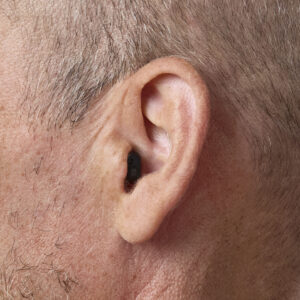
Age-related hearing loss, known clinically as presbycusis, is a common cause of hearing loss in older adults3. It involves a gradual, progressive, and usually bilateral decline in hearing, typically for high-pitched sounds, resulting from degeneration of the sensory hair cells in the inner ear2,3.
In Canada, a study that objectively measured hearing found that 63% of men and 46% of women between the ages of 40 and 79 had measurable hearing loss, even though most reported no perceivable difficulty with their hearing4. Almost one-third of the global population over the age of 65 experiences hearing difficulties, with prevalence rising with each decade of life1.
So yes, age is a major factor. But age alone doesn’t tell the whole story. Many people searching for answers about hearing loss assume it is simply a normal part of aging, but a comprehensive hearing assessment can often identify possible additional contributing factors. So, hearing loss is more than “Just Aging”.
The Role of Chronic Health Conditions
A growing body of research suggests that many chronic health conditions accelerate or compound hearing loss beyond what aging alone would cause. This is important, because these are conditions that are treatable and manageable, meaning hearing health may be partially within our control.
Research using data from the Canadian Longitudinal Study on Aging, one of the largest aging studies in the world, confirmed that cardiovascular risk factors such as hypertension, diabetes, and smoking are associated with hearing loss5,8.
Cardiovascular Disease and Hypertension
The connection between heart health and hearing health is well established. The inner ear depends on a rich blood supply to function. Cardiovascular disease, and high blood pressure can disrupt this blood flow, compromising the delicate hair cells responsible for converting sound into nerve signals7. This is one reason why regular hearing testing is important for people living with cardiovascular disease or high blood pressure.
Diabetes
The relationship between diabetes and hearing loss has been studied extensively. The proposed mechanism involves microvascular damage: the same mechanism that affects the eyes and kidneys in diabetes can damage the inner ear as well6. Multiple studies have found a consistent association between type 2 diabetes and hearing loss. What is particularly notable is that hearing loss in people with diabetes often resembles age related hearing loss, but with a greater level of hearing loss than expected for age alone6. In other words, diabetes appears to accelerate age-related hearing decline.
If you have diabetes and have noticed changes in your hearing, an audiologist can determine whether hearing loss is present and discuss appropriate treatment options.
Kidney Disease and Other Conditions
Research also links kidney disease specifically to hearing loss, and conditions such as osteoporosis have been associated with metabolic hearing loss patterns6. The inner ear and the kidney share structural and functional similarities, which may explain this overlap6.
 So, Is Hearing Loss “Normal”?
While some hearing change with age is a natural part of life, the degree to which your hearing changes are influenced significantly by factors you may be able to address1. Such as cardiovascular health, blood sugar control, noise exposure history, and timely access to audiological care1.
Hearing loss that goes unaddressed can have real consequences for brain health, mental health, relationships, and quality of life. The earlier a hearing concern is identified and managed, the better the outcomes. Routine hearing evaluations can help detect hearing loss early, allowing for timely treatment and better long-term hearing health.
What You Can Do

1. Don’t wait for hearing loss to become severe before seeking help. If you notice changes in your hearing, book a comprehensive hearing test with one of our registered audiologists. Routine hearing assessments are recommended for children and adults of all ages.
2. Consider hearing aids if recommended. Today’s hearing aids are highly advanced and evidence consistently suggests that hearing aids improve hearing-specific quality of life and may help protect cognitive health.
3. Manage chronic conditions. Keeping blood pressure, blood sugar, and cholesterol well controlled is not just good for your heart, it’s good for your ears.
4. Protect your hearing. Past noise exposure may accelerate age-related hearing loss in later life. Book a consultation for custom hearing protection to help protect against noise-induced hearing loss caused by prolonged exposure to loud sounds.
If you are looking for a hearing test, custom hearing protection or information on hearing aids in Halifax, Bedford, Clayton Park, Dartmouth or the surrounding area, our audiologists are here to help.
Book Your Appointment Today!
References
- Ahmed, S., Vaden, K. I., Leitao, D., Dubno, J. R., & Drögemöller, B. I. (2025). Large-scale audiometric phenotyping identifies distinct genes and pathways involved in hearing loss subtypes. Communications Biology, 8, 1515. https://pmc.ncbi.nlm.nih.gov/articles/PMC12579245
- Feder, K., Michaud, D., Ramage-Morin, P., McNamee, J., & Beauregard, Y. (2015). Prevalence of hearing loss among Canadians aged 20 to 79: Audiometric results from the 2012/2013 Canadian Health Measures Survey. Health Reports, 26(7), 18–25. https://pubmed.ncbi.nlm.nih.gov/26177043
- Feltner C, Wallace IF, Kistler CE, et al. Screening for Hearing Loss in Older Adults: An Evidence Review for the U.S. Preventive Services Task Force [Internet]. Rockville (MD): Agency for Healthcare Research and Quality (US); 2021 Mar. (Evidence Synthesis, No. 200.) Available from: https://www.ncbi.nlm.nih.gov/sites/books/NBK569271/
- Government of Canada. (2026). Noise and sound: Hearing loss and tinnitus. Health Canada. https://www.canada.ca/en/health-canada/services/noise-your-health/hearing-loss-tinnitus.html
- Mick, P. T., Pichora-Fuller, M. K., Bhatt, D. L., Bherer, L., Comeau, G., Gauthier, C., Kamil, R. J., Kirkland, S., Leroux, T., Li, L., Maisel, N., McIntyre, A. D., Phillips, N. A., Ramage-Morin, P., Raina, P., Sohel, N., Wolfson, C., & Leroux, T. (2023). Associations between cardiovascular risk factors and audiometric hearing: Findings from the Canadian Longitudinal Study on Aging. Ear and Hearing, 44, 1332. https://doi.org/10.1097/AUD.0000000000001351
- Samocha-Bonet, D., Wu, B., & Ryugo, D. K. (2021). Diabetes mellitus and hearing loss: A review. Ageing Research Reviews, 71, Article 101423. https://doi.org/10.1016/j.arr.2021.101423
- Sheng, L., Chen, X., Pan, W., Shi, Y., Zhong, Y., Zhang, J., Chen, Y., & Pu, J. (2026). Association of atherosclerosis cardiovascular diseases with hearing loss in older people: a cross-sectional age-stratified analyses of 4,441 participants. BMC geriatrics, 26(1), 4. https://doi.org/10.1186/s12877-025-06727-6
- Wang, Y.R., Bacon, BA., Champoux, F. et al.Pure tone auditory thresholds and their association with cognition in the Canadian Longitudinal Study on Aging. Sci Rep 16, 5808 (2026). https://doi.org/10.1038/s41598-026-36979-0

Author
Patricia Gazeley
REGISTERED AUDIOLOGIST
Patricia is a passionate advocate for hearing health, inspired by her personal experience with hearing loss. She empowers others through education to take charge of their hearing health and become advocates for themselves.