
Introduction
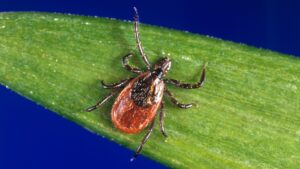
Lyme disease is becoming increasingly common in Nova Scotia. It is an infection caused by bacteria called Borrelia burgdorferi, spread through the bite of infected black-legged ticks.¹ Most people know it for causing symptoms like tiredness, joint pain, and problems with the nervous system. But did you know it can also affect your hearing? Research is showing a growing connection between Lyme disease and hearing problems, including hearing loss and tinnitus (ringing in the ears).² This article explores what we know about that connection.
What Is Lyme Disease?
Lyme disease can affect many parts of the body at once.³ In the early stages, you might notice a fever, fatigue, headaches, and a bull’s-eye shaped skin rash called erythema migraines.⁴ If it is not treated early, the infection can spread to the joints, heart, and nervous system, causing more serious and long-lasting problems.⁴
Can Lyme Disease Cause Hearing Loss?
Yes, there is growing evidence that it can.⁵ A recent systematic review found that Borrelia burgdorferi is commonly detected in people with unexplained sensorineural hearing loss (the type caused by damage to the inner ear or auditory nerve), and experts now recommend testing for Lyme disease when no other cause for hearing loss can be found.⁵
When Lyme disease reaches the nervous system, a stage called Lyme neuroborreliosis, it can cause inflammation in and around the inner ear.⁶ The inner ear is responsible for turning sound waves into signals that your brain understands as sound. When it becomes inflamed, this process breaks down, and hearing loss can follow.⁶ In some cases, sudden hearing loss in both ears has been reported as one of the first signs that someone has Lyme disease.⁷
Can Lyme Disease Cause Tinnitus?
Tinnitus is the name for hearing sounds, like ringing, buzzing, or hissing, that have no outside source. It has also been linked to Lyme disease.² We do not yet fully understand exactly why this happens, but it is thought to be caused by the inflammation and nerve damage the bacteria creates in the hearing system. In one study of people with chronic Lyme disease, nearly half (48%) reported being oversensitive to sound, and tinnitus was a commonly reported symptom.² Tinnitus can seriously affect daily life, making it hard to concentrate, sleep, and enjoy everyday activities.⁸
Why Is Lyme Disease So Hard to Diagnose?
One of the biggest challenges with Lyme disease is that it looks like many other conditions.⁹ Its symptoms are often vague, which means hearing problems caused by Lyme disease can easily be mistaken for something else entirely.
To make things more complicated, standard blood tests for Lyme disease can come back negative, especially in the early weeks of infection when the body has not yet produced enough antibodies to be detected.¹⁰ In Canada, diagnosis involves a two-step blood test process: a screening test followed by a confirmatory test. While this approach works well for most patients, it can miss some cases in the early stages of infection.¹⁰
How Is Lyme Disease Treated?
The good news is that when Lyme disease is caught early, it responds well to treatment.¹¹ Antibiotics, most commonly doxycycline or amoxicillin, are used to clear the infection.¹² If the disease has spread to the nervous system, stronger antibiotics given through an IV (intravenous ceftriaxone) may be needed.¹²
For people who have developed hearing loss or tinnitus as a result of Lyme disease, a team approach works best. This may include working with an audiologist to assess and manage hearing changes, an ear, nose, and throat (ENT) specialist for further evaluation, and an infectious disease specialist to guide antibiotic treatment.⁹
 Key Takeaways
Lyme disease is more than just a rash and achy joints, it can affect your hearing in very real ways, and those symptoms deserve to be taken seriously.⁵ Here is what to keep in mind:
– Check for ticks after spending time outdoors, especially in wooded or grassy areas.
– See a doctor early if you develop a bull’s-eye rash, flu-like symptoms after a tick bite, or unexplained hearing changes.
– Mention your hearing to your doctor if you have been diagnosed with or are being investigated for Lyme disease.
– See an audiologist if you notice changes in your hearing or develop tinnitus, especially if Lyme disease is suspected.
Are You Concerned About Your Hearing?
If you have experienced changes in your hearing, developed tinnitus, or have a history of Lyme disease, do not wait to get your hearing checked. Early assessment can make a real difference.
At Clayton Park Audiology our compassionate and expert team is here to help patients from Halifax, across Nova Scotia, and throughout Atlantic Canada. You do not need a referral to make an appointment. We offer comprehensive hearing evaluations, tinnitus assessments, hearing aids, and personalized care to support your hearing health at every stage. Whether you are dealing with a new concern or looking to better understand your hearing, we would love to hear from you.
📅 Book your hearing assessment today.
References
1. Government of Canada. (2023). *Lyme disease: Symptoms and treatment.* https://www.canada.ca/en/public-health/services/diseases/lyme-disease.html
2. Livartowski, J., Thibault, G., & Cohen, P. (2020). Audiologic and cognitive manifestations in inflammatory rheumatic diseases. *The Hearing Journal, 73*(2). https://journals.lww.com/thehearingjournal
3. Government of Canada. (2022). *Lyme disease: For health professionals.* https://www.canada.ca/en/public-health/services/diseases/lyme-disease/health-professionals-lyme-disease.html
4. National Collaborating Centre for Infectious Diseases. (2024). *Lyme disease.* https://nccid.ca/debrief/lyme-disease
5. Piątkowska-Janko, E., Bogorodzki, P., & Dobrowolska, M. (2025). *Borrelia burgdorferi* infection is worth screening to investigate sensorineural hearing loss (SNHL) etiology: A systematic review. *PubMed Central.* https://pmc.ncbi.nlm.nih.gov/articles/PMC12208881
6. Korzeniewski, K., Juszczak, D., & Grygorczuk, S. (2021). Association between sudden sensorineural hearing loss and Lyme disease. *Journal of Clinical Medicine, 10*(5), 1130. https://doi.org/10.3390/jcm10051130
7. Pawlak-Osinska, K., & Burduk, P. K. (2024). Isolated sudden bilateral neurosensory hearing loss as a manifestation of Lyme disease. *Journal of Audiology and Otology, 28*(1). https://doi.org/10.7874/jao.2023.00129
8. Seriburi, V., Ndukwe, N., Chang, Z., Cox, M. E., & Wormser, G. P. (2022). Residual symptoms and quality of life after treated Lyme neuroborreliosis. *PubMed Central.* https://pmc.ncbi.nlm.nih.gov/articles/PMC11842133
9. Goldfarb, D., & Sataloff, R. T. (n.d.). *Lyme disease: A review for the otolaryngologist.* https://www.entprinceton.com/conditions-treatments/articles-and-publications/17-published-articles/32-lyme-disease-a-review-for-the-otolaryngologist
10. Andermann, K., Bhatt, M., Burns, K., Silverman, M., Smith, S., & Tilley, P. (2015). Lyme disease in Nova Scotia. *Dalhousie Medical Journal.* https://ojs.library.dal.ca/DMJ/article/view/8786/7572
11. Centre for Effective Practice. (2020). *Early Lyme disease management in primary care.* https://cep.health/clinical-products/early-lyme-disease
12. Government of Canada. (2014). Lyme disease: Clinical diagnosis and treatment. *Canada Communicable Disease Report, 40*(11). https://www.canada.ca/content/dam/phac-aspc/migration/phac-aspc/publicat/ccdr-rmtc/14vol40/dr-rm40-11/assets/pdf/ccdrv40i11a01-eng.pdf

Author
Lyndsay Bozec
REGISTERED AUDIOLOGIST, NSCASLP
Lyndsay is a passionate advocate for hearing health awareness and hearing preservation. Over the years she has delivered various hearing health presentations and hearing aid workshops for caregiver workshops across HRM.