
At Clayton Park Audiology in Halifax, Nova Scotia, our priority is to ensure that every patient receives safe, effective, and individualized hearing care. As a local and independent audiology clinic serving Halifax and surrounding communities, we are committed to evidence-based hearing healthcare.
In recent years, over-the-counter (OTC) hearing aids have gained attention, particularly following their introduction in the United States, as a more accessible and lower-cost option for individuals experiencing hearing difficulties.
However, the situation in Canada is different. If you are considering OTC hearing aids, it is important to understand how they are regulated, who they are designed for, and how they compare to professionally fitted hearing devices.
Are OTC Hearing Aids Approved in Canada?
At this time, OTC hearing aids are not approved or regulated as hearing aids in Canada.
Unlike the United States, Canada does not have a designated OTC hearing aid category. In Canada, hearing aids are classified as regulated medical devices and must be dispensed following a diagnostic hearing assessment by a registered audiologist or hearing care professional.
Devices marketed online or imported as “OTC hearing aids” have not been reviewed or approved by Health Canada for the diagnosis or treatment of hearing loss. As a result, they may not meet Canadian standards for safety, quality, or performance.
Why Is Canada More Cautious?
Canada’s approach reflects a focus on patient safety and medical oversight.
Hearing loss is a medical condition that can have a variety of underlying causes. Some causes may require medical treatment or referral to an ENT specialist. By requiring hearing aids to be dispensed through regulated channels, the Canadian healthcare model helps ensure that:
- Hearing loss is properly diagnosed through a hearing assessment
- Medical conditions are not overlooked
- Hearing aids are appropriately selected and fitted
- Patients receive ongoing clinical care and follow-up
This model prioritizes long-term hearing health and outcomes, rather than access to devices alone.
How Are OTC Hearing Aids Different from Prescription Hearing Aids?
1. Diagnostic Evaluation
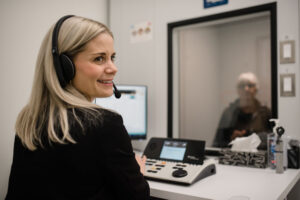
Professionally fitted prescription hearing aids begin with a comprehensive hearing test conducted by a licensed audiologist in Halifax or Nova Scotia. This evaluation:
- Identifies the type and severity of hearing loss
- Detects any medical concerns requiring referral
- Establishes a personalized treatment plan
OTC devices are purchased without a diagnostic hearing evaluation, which increases the risk of improper or delayed care.
2. Customization and Precision
Prescription hearing aids are:
- Programmed to prescriptive targets based on your hearing test results
- Verified using real-ear measurements for accurate amplification
- Fine-tuned for speech clarity, comfort, and background noise
OTC devices rely on generic settings or self-adjustment, which cannot match the precision of individualized hearing aid fittings performed by an audiologist.
3. Intended Users
OTC hearing aids are designed only for adults with perceived mild to moderate hearing loss.
However, many individuals misjudge their hearing ability. Using an OTC device when hearing loss is more complex may result in:
- Inadequate amplification
- Distorted sound quality
- Increased listening effort
- Over- or under-amplification
A professional hearing test ensures the right hearing aid design and technology is selected for your specific needs.
4. Ongoing Care and Support
Hearing care does not end with the device. Audiologist-led care includes:
- Counseling and education
- Follow-up visits and hearing aid adjustments
- Troubleshooting and support
- Long-term monitoring of hearing health
OTC hearing aids do not include this level of professional support, which can lead to frustration or inconsistent use.

Can Canadians Still Buy OTC Hearing Aids?
Yes, OTC-style hearing devices are often available to Canadians through online retailers or cross-border purchasing, particularly from U.S.-based companies.
Many patients in Halifax and across Nova Scotia ask about ordering hearing aids online. While this is possible, it is important to understand:
- These devices are not regulated in Canada as hearing aids
- There may be limited consumer protection or warranty support
- Access to service, repairs, or adjustments may be limited or non-existent locally
- Device quality and performance can vary significantly
Potential Benefits of OTC Hearing Aids
OTC devices may offer some advantages:
- Lower upfront cost
- Increased accessibility for individuals not ready to visit a hearing clinic
- A potential starting point for adults with perceived mild hearing loss
For a small group of users, they may provide some benefit.
Potential Risks and Limitations of OTC Hearing Aids
There are also important considerations:
- No formal diagnosis of hearing loss
- Risk of missing underlying medical conditions
- Limited customization and verification
- No ongoing clinical support
- Variable sound quality and performance
- Potential for device abandonment
A Balanced Approach to Hearing Care
At Clayton Park Audiology, we respect that every patient has different needs, preferences, and circumstances. As a trusted audiology clinic in Halifax, we are always happy to answer questions about OTC hearing aids and discuss all available options.
However, based on clinical evidence and professional standards of care, OTC hearing aids are not considered a comprehensive or long-term solution for most patients.
Professionally fitted hearing aids are designed not only to amplify sound, but to:
- Improve speech understanding
- Enhance communication in everyday environments
- Support cognitive and social well-being
- Adapt to your hearing needs over time
Our Commitment to You
Our goal is not simply to provide a device but to support your overall hearing health through evidence-based, patient-centered care in Halifax and Nova Scotia.
If you are experiencing hearing concerns or are considering prescription hearing aids, we encourage you to book a comprehensive hearing test or a hearing aid consultation in Halifax. Our team is here to guide you toward the safest and most effective solution for your individual needs.

Author
Lyndsay Bozec
REGISTERED AUDIOLOGIST, NSCASLP
Lyndsay is a passionate advocate for hearing health awareness and hearing preservation. Over the years she has delivered various hearing health presentations and hearing aid workshops for caregiver workshops across HRM.